

What Are The Symptoms of Coeliac Disease?
Coeliac disease is an autoimmune condition where eating gluten — a protein found in wheat, rye, barley and oats — triggers damage to the small intestine. It can cause a wide range of symptoms, but not everyone with coeliac disease will experience them in the same way. In fact, some people show no obvious signs at all, yet remain at risk of serious long-term complications if the condition goes undiagnosed.
Understanding the symptoms, particularly in children, is crucial. Early testing and diagnosis can dramatically improve health outcomes.
Quick Summary
Coeliac disease can cause a wide range of symptoms — from gut issues like bloating, diarrhoea and stomach pain, to non-digestive problems such as fatigue, anaemia, mouth ulcers and skin rashes. In children, signs may include poor growth, delayed puberty or simply being “out of sorts.” Some people have no obvious symptoms at all but remain at risk of long-term health complications if undiagnosed. If you or your child have persistent unexplained health issues, ask your GP about testing for coeliac disease.
Why Symptoms Differ From Person to Person
Symptoms vary because coeliac disease can affect many parts of the body — not just the gut. Genetics, age, and even how long someone has been consuming gluten can play a role. Some people develop obvious digestive problems, while others may only experience fatigue, anaemia or even skin issues. There’s also “silent” coeliac disease, where no clear symptoms are present.
Common Digestive Symptoms: For many Australians, the first warning signs are gut-related. These may include diarrhoea, constipation, bloating, excessive wind, stomach pain, nausea, vomiting, and unexplained weight loss.
Non-Digestive Symptoms: Coeliac disease doesn’t stop at the gut. It can affect nutrient absorption and immune function, leading to fatigue, iron or vitamin deficiencies, mouth ulcers, headaches, brain fog, joint pain, infertility, and weak bones such as osteoporosis or osteopenia.
Skin Symptoms: A classic sign is dermatitis herpetiformis — an intensely itchy, blistering rash. It usually appears on elbows, knees, or buttocks and is strongly linked to coeliac disease.
Symptoms in Children
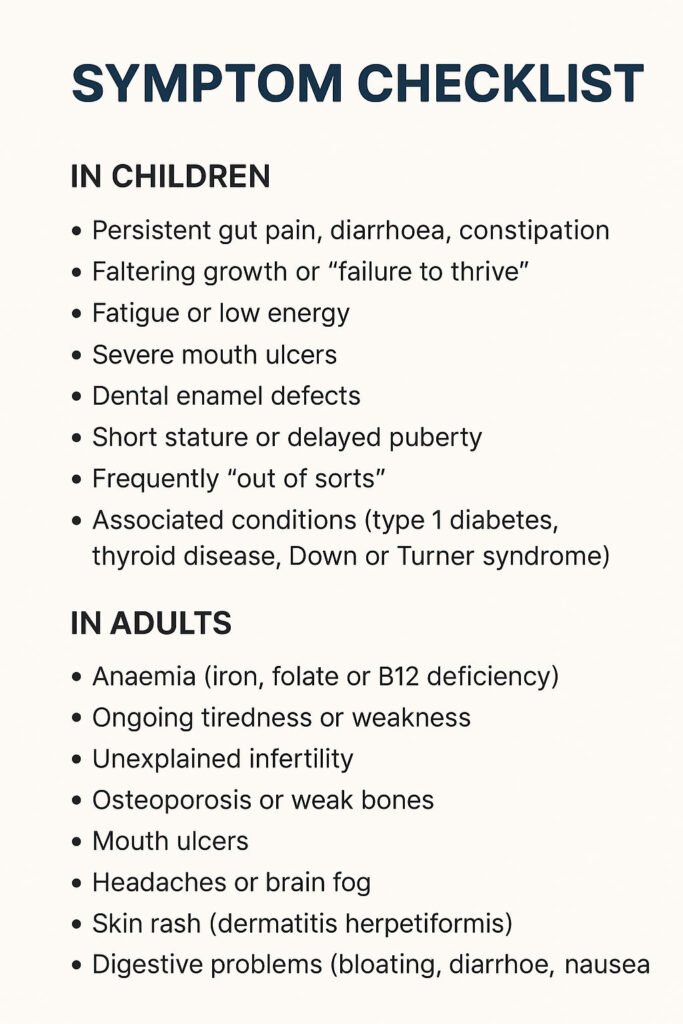
Children often display different signs compared with adults. Parents should see a GP if their child has ongoing gut pain, faltering growth, delayed puberty, short stature, prolonged fatigue, severe or persistent mouth ulcers, or dental enamel defects. Some children with coeliac disease also have associated conditions such as type 1 diabetes, autoimmune thyroid disease, Down syndrome, Turner syndrome, or a family history of coeliac disease. Sometimes, the only sign is a child who is regularly “out of sorts” or generally unwell.
- Persistent gut pain, diarrhoea, constipation
- Faltering growth or “failure to thrive”
- Fatigue or low energy
- Severe mouth ulcers
- Dental enamel defects
- Short stature or delayed puberty
- Frequently “out of sorts”
- Associated conditions (type 1 diabetes, thyroid disease, Down or Turner syndrome)
Symptoms in Adults
Adults are less likely to present with classic digestive issues. Instead, subtle or non-gut problems are more common, such as anaemia that doesn’t respond to supplements, ongoing fatigue, unexplained infertility, osteoporosis, or neurological symptoms like numbness, tingling, or headaches.
Some Australians with coeliac disease don’t experience obvious symptoms. This is known as “silent” or “atypical” coeliac disease. Even without symptoms, untreated coeliac disease can cause long-term complications such as poor bone health, infertility, and an increased risk of certain cancers.
- Anaemia (iron, folate or B12 deficiency)
- Ongoing tiredness or weakness
- Unexplained infertility
- Osteoporosis or weak bones
- Mouth ulcers
- Headaches or brain fog
- Skin rash (dermatitis herpetiformis)
- Digestive problems (bloating, diarrhoea, nausea)
Speak with your GP if you or your child have persistent unexplained digestive symptoms, faltering growth, poor weight gain, prolonged fatigue, recurrent mouth ulcers, unexplained nutrient deficiencies, or a family history of coeliac disease.
Diagnosing Coeliac Disease in Australia
Initial Screening: Blood Tests
Testing usually begins with a blood test measuring specific antibodies (known as coeliac serology). The most common tests include transglutaminase-IgA (tTG-IgA), deamidated gliadin peptide-IgG (DGP-IgG), and sometimes total IgA levels. It’s important that children and adults are still eating gluten at the time of testing, otherwise results may be unreliable.
Confirming the Diagnosis: Small Bowel Biopsy
A gastroscopy with small bowel biopsy is the gold standard for diagnosis in both adults and children in Australia. This quick, painless procedure (done under sedation) collects small samples of the intestine to look for typical changes caused by coeliac disease.
Gene Testing (HLA-DQ2/8)
Genetic testing can be useful in some situations, particularly for people with a family history of coeliac disease. A negative result effectively rules out coeliac disease, while a positive result shows genetic risk but does not mean the person definitely has the condition.
What If Tests Are Negative but Symptoms Persist?
Sometimes blood tests can miss coeliac disease (false negatives). If symptoms continue, referral to a paediatric gastroenterologist (for children) or a gastroenterologist (for adults) may be needed.
Can Coeliac Disease Be Diagnosed Without a Biopsy?
In Europe, new guidelines allow some children to be diagnosed without a biopsy if their blood antibody levels are very high and confirmed with additional tests. However, in Australia this approach isn’t widely adopted due to variations in test accuracy. Here, a biopsy remains the standard for children and adults.
Summing up
Once diagnosed, the only treatment is a strict lifelong gluten-free diet. With the right support, most Australians with coeliac disease go on to live healthy, active lives. Regular follow-up with a healthcare professional helps monitor progress and ensure good nutrient levels.
Coeliac disease has many faces. From classic digestive problems to more subtle issues like fatigue, mouth ulcers or poor growth in children, the symptoms can be easy to miss. If you or your child experience any of the signs mentioned, it’s important to talk with your doctor about testing. Early diagnosis is key to preventing complications and improving quality of life.
For more information and resources, visit Coeliac Australia.